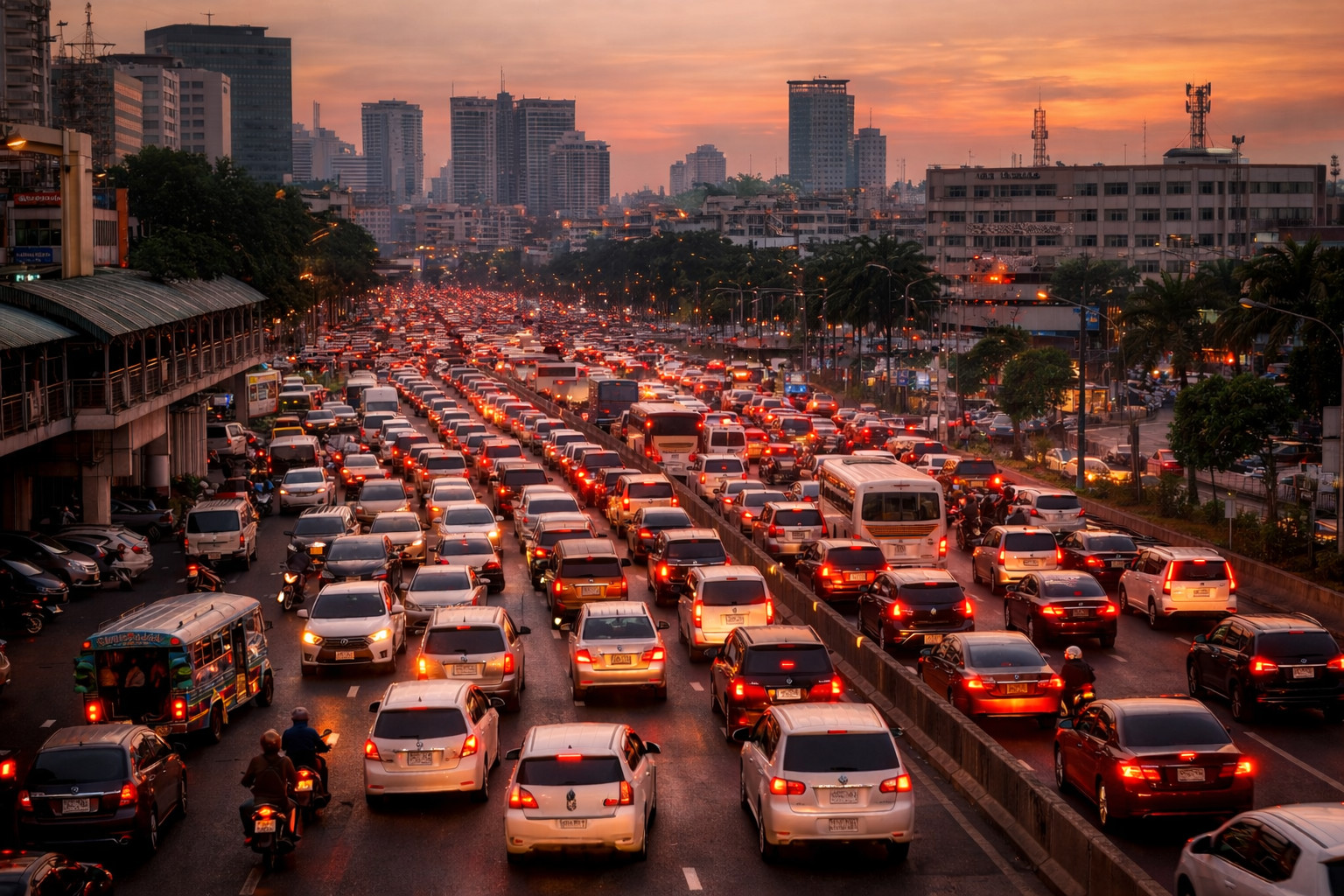
Davao City has emerged as the most traffic-congested city in the Philippines and one of the most congested cities globally, according to the 2025 TomTom Traffic Index — a respected international study that analyzes real-world driving data to measure traffic conditions.
How Bad Is Davao’s Traffic?
Based on the 2025 index:
- Davao City ranks 12th out of 482 cities worldwide in overall traffic congestion.
- The city recorded a 66.2% congestion level, meaning travel times are, on average, more than two-thirds longer than they would be under free-flowing road conditions.
- In a 15-minute drive, motorists in Davao City cover only about 4.4 kilometers.
- Drivers lose an estimated 168 hours per year stuck in traffic during peak periods — equivalent to about seven full days annually.
This represents a noticeable increase compared to 2024, when the estimated time lost to traffic in Davao City was lower.
For comparison, Manila City ranks significantly lower on the global list:
- 57% congestion level
- 4.7 kilometers traveled in 15 minutes
- 143 hours lost per year in traffic, up from 127 hours the previous year
How the TomTom Traffic Index Works
The TomTom Traffic Index measures congestion by comparing actual travel times with free-flow travel times — the speed vehicles would move if roads were empty. The larger the gap between the two, the higher the congestion score.
The data is gathered from anonymized GPS information collected from millions of vehicles worldwide, making it one of the most comprehensive traffic studies available. The 2025 index analyzed traffic conditions in 482 cities across the globe, providing a broad snapshot of urban mobility trends.
Global Traffic Context
On a global scale, Mexico City continues to rank as the most traffic-congested city in the world, with a congestion level of 75.9%. Other cities near the top of the list include major urban centers in India, Ireland, and Poland, highlighting that traffic congestion is a worldwide issue, not limited to developing countries.
Despite this global context, Davao City’s ranking places it firmly among the worst-affected cities internationally — not just within Southeast Asia or the Philippines.
What This Means for Dabawenyos
For many Dabawenyos, these numbers simply confirm everyday experience: slow commutes, gridlock during rush hours, and long travel times even for short distances. However, the 2025 data adds global perspective — Davao City’s traffic situation is no longer just a local inconvenience but a world-class congestion problem.
Beyond the Headlines
It’s important to understand a few key points:
- Traffic congestion varies across different parts of Davao City, with the worst conditions typically occurring along major corridors and commercial areas.
- Rankings can shift slightly depending on how city boundaries are defined, but all available data consistently places Davao City among the most congested cities worldwide.
- Rapid urban growth, increased vehicle ownership, and infrastructure lag all contribute to worsening traffic conditions.
What’s Being Done?
Local and national authorities have acknowledged the severity of traffic congestion in Davao City and continue to discuss long-term solutions such as infrastructure expansion, traffic management improvements, and public transport development. However, many of these solutions require significant time, funding, and coordination before residents will feel meaningful relief.
What do you think, Dabawenyos?
Is this ranking a wake-up call for better urban planning, or simply the reality of a fast-growing city? Share your thoughts.